_edited.png)


Persian Woven Coaster Mat
Place of Origin : Iran
Iranian (Persian) woven coaster mats and rugs are deeply rooted in a 2,500-year-old weaving tradition that serves as a living archive of Iran’s cultural and spiritual identity. Circular designs, frequently featuring central medallions known as Toranj, are symbolic representations of the heavens or the cosmos, radiating outward to signify divine order and completeness. Common motifs like the Boteh (paisley) represent the cypress tree, a Zoroastrian and later Islamic symbol of eternal life and resilience. These intricate patterns are often hand-dyed with natural pigments derived from local plants and minerals, ensuring that each piece remains an authentic connection to the weaver’s geographical and historical environment.

Image Courtesy : Tabrizi Rugs
In the everyday lives of Iranians, these mats represent more than just decoration; they are essential components of hospitality and spiritual practice. Historically, larger versions of these mats formed the sofreh—the traditional fabric spread upon which meals are served and guests are welcomed—signifying a sacred communal space. In many households, smaller woven mats also serve as prayer rugs (Jānamāz) or coasters for tea, acting as symbols of purity and cleanliness. They are often passed down through generations as cherished heirlooms, carrying the personal aspirations and folklore of the families who crafted them, thereby maintaining a tangible link to ancestral roots.
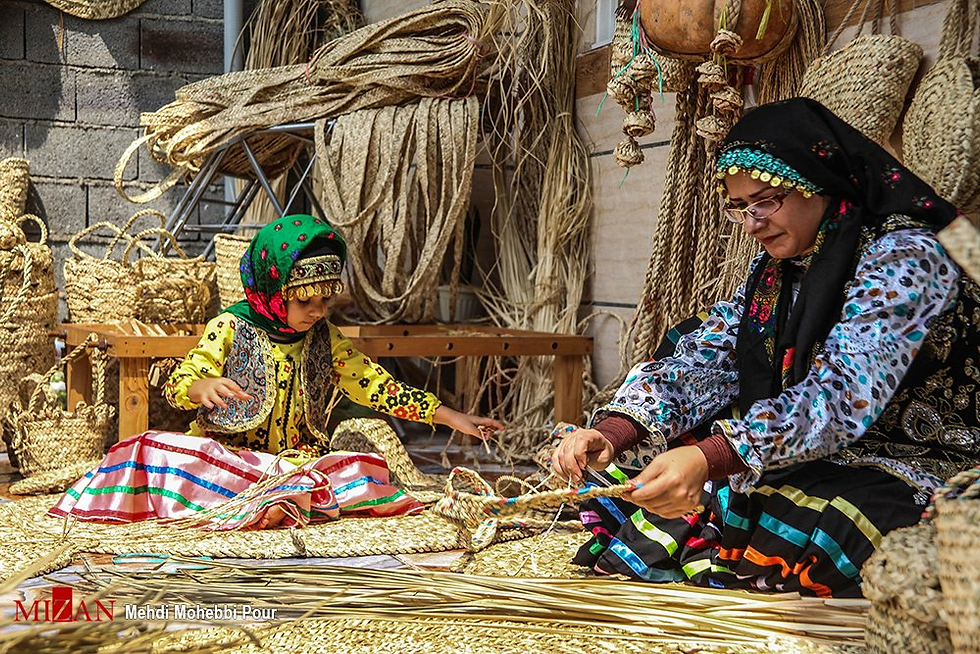
Image Courtesy : Iran Front Page, Nov 15, 2018
For the artisans themselves, particularly in rural regions like Khuzestan, Bushehr, and Mazandaran, the craft of mat-weaving—known as Hasir-bafi—is a vital pillar of the local economy and a primary profession for many women. Using locally sourced materials such as palm fronds, wetland reeds, or rice stems, artisans engage in a labor-intensive process that requires profound patience and skill, with roughly 70 percent of these artisans being women. Despite modern economic challenges and sanctions, this industry remains a "bedrock" of rural economic activity, fostering female empowerment and providing a sustainable livelihood that celebrates regional diversity and environmental harmony.


Comments